Horizon Institute

Talks · Moderation · Workshops

SpeakingDr. Felix Ernst Schmelzer

Talks and workshops on thinking with AI, the new biology and the stories that drive science. In English, German and Spanish.

Talks

Keynotes and talks

Each talk grows out of an essay or out of our work with leaders, and can be adapted in length, language and audience. Other essays can become talks on request.

AI, language and judgement

Keynote with live demonstration · 45–60 min · for leadership teams

Learning to Think with AI

Most of us use AI to write faster. Perhaps its more interesting use lies elsewhere: in thinking, together with the archive of human thought. This keynote shows how to lead a language model like an interdisciplinary advisory board, one that knows the archive of human thought but not your situation. Live on stage, a question from the audience goes before the board: counter-voices, a solution borrowed from a distant field, an image that carries the idea. And the audience sees where the model only tells us what we want to hear.

Background: classical rhetoric, a PhD on the rhetoric of knowledge and five years directing a postgraduate programme in rhetoric. Can be extended into a workshop for leadership teams.

Keynote · 45 min · for research institutions and cultural audiences

The Alien Paradox

Modern science has made itself machine-readable from its very beginning. When Galileo declared that the book of nature is written in the language of mathematics, colours, sounds and the perceiving self were left out of the picture. This talk traces that path from Galileo to today’s self-driving labs, where AI runs experiments without us. AI is the detached observer we believed we had to be but never could. And precisely this alien may lead us back to the living world: the machine that has never experienced anything is helping us hear that there is someone out there in the sea, not merely something. Not redemption, but a task.

Background: a PhD on the rhetoric of Renaissance mathematical treatises and research on the “book of nature” metaphor at the Sorbonne Nouvelle.

Talk · 30–45 min · for universities, publishers and communication teams

Time for the Poets to Return

Our answer to the flood of AI-generated text is yet another AI: detectors that certify a text as human and are easily fooled. The result is an arms race in which machines learn to sound more human than we do. This talk asks what human writing actually is, how AI can strengthen it instead of replacing it, and why the answer lies in a layer of language that statistics cannot reach: voice, presence and the encounter with another person.

Background: years of teaching rhetoric and poetry at university, and daily work with AI as a writer.

Life, nature and the economy

Keynote · 45 min · for industrial biotech and the bioeconomy

From Machine to Partner

For decades, synthetic biology tried to reprogram cells like machines, and the cells answered with metabolic stress and mutation. A new generation of methods works the other way round: directed evolution, growth coupling, metabolic symbiosis. We set the conditions and let evolution, the most powerful optimization program there is, find the path. This talk tells the story of that shift, from forced labour to fair wages, and shows why partnering with life is not romanticism but an answer to the industry’s most expensive problem: scaling.

Background: The Biological Awakening, and the workshop “From Machine to Dialogue Partner” at the Arren Bar-Even Symposium, Berlin.

Keynote with live demonstration · 45–60 min · for boards, investors and sustainability teams

Who Speaks for Nature?

Companies are beginning to give nature a seat on the board. But who takes that seat, and how would anyone know what nature wants? A talk on the Interspecies Economy and the empty chair in the boardroom. On stage, a board of voices assembled with AI debates the question, and the audience sees where such a board opens new perspectives and where it merely flatters.

Background: The Biological Awakening, written in dialogue with the synthetic biology community.

Keynote · 45 min · for sustainability, cultural and academic audiences

Welcome to the Amicene

We tend either to glorify technological progress or to condemn it. This talk looks for a third path, and finds it where few would expect: in the labs of synthetic biology, where young researchers work with microorganisms to clean water, grow houses from mycelium and make light without electricity. It proposes a name for the era that could follow. Not the Anthropocene, a word that would be a linguistic capitulation, but the Amicene: a new and at the same time very old friendship between us and the living world.

Background: years as a “supportive alien” from the humanities in the synthetic biology community, from the iGEM competition in Paris to the SynBioReactor in Berlin.

Science, stories and the future

Keynote · 45 min · for technology, culture and public audiences

The Paradise Machine

Why does technological progress feel unstoppable, as if a higher power were at play? From Francis Bacon to Silicon Valley, this talk uncovers the story of salvation hidden in our idea of progress, and shows how it shapes today’s debate about AI.

Background: a seminar on Bacon’s New Atlantis and the founding myth of modern science, taught at the University of Münster.

Keynote · 45 min · for innovation, strategy and foresight

What Is Written Comes to Pass

Demis Hassabis says his vision of artificial general intelligence took shape when he read Asimov and Iain M. Banks as a teenager. Kepler dreamed of a journey to the Moon, Bacon imagined a society that redesigns living things, and Wernher von Braun’s Mars novel called the leader of the Martian government “the Elon”. This talk follows the strange power of fiction to steer technology, and asks which stories are shaping our future right now.

Background: research on literature and science, from Renaissance treatises to poetry that answers quantum physics.

Formats

From keynote to dialogue forum

  • Keynote30 to 60 minutes, with or without a live demonstration.
  • ModerationPanels, conferences and advisory boards in science, medicine and industry.
  • Dialogue forumAn evening on one big question, with voices from several disciplines and the audience.
  • WorkshopFrom a compact format of 2¼ hours to a full-day masterclass, for teams and leadership groups, for example on learning to think with AI.
  • LanguagesEnglish, German and Spanish.
Background

Between literature and science

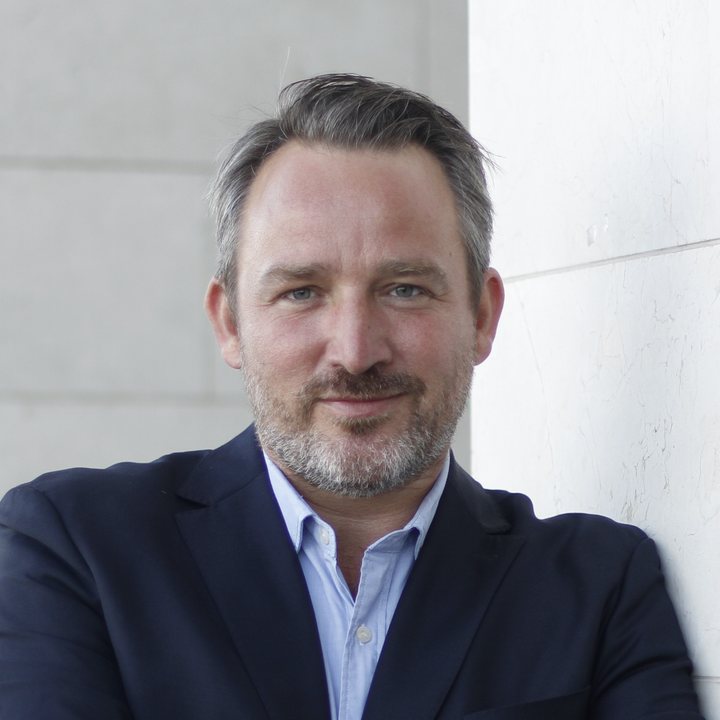
Portrait of Dr. Felix Ernst Schmelzer

Dr. Felix Ernst Schmelzer

Literary scholar · Moderator · Essayist

Felix studied Romance and English philology at the University of Münster, where he wrote his master’s thesis on the reception of modern physics in contemporary poetry. Research fellowships took him to the University of Salamanca, with a grant from the German Academic Exchange Service (DAAD), and to the Université Sorbonne Nouvelle in Paris, where he worked on the metaphor of the “book of nature” in early modern science. He received his PhD summa cum laude from the University of Navarra in Pamplona for a study of the rhetoric of knowledge in Renaissance mathematical treatises: how their authors used storytelling and the commonplaces of classical rhetoric to win their readers over to mathematics.

From 2015 to 2021 he taught at the Universidad de los Andes in Santiago de Chile, from 2017 as Associate Professor of Rhetoric and Comparative Literature. There he founded a practice-oriented postgraduate programme in rhetoric and directed it for five years, with managers, politicians, lawyers and physicians among its participants. He led a research project funded by Chile’s national science fund FONDECYT, established cooperation agreements with the University of Münster and the Hebrew University of Jerusalem, and has spoken at conferences and seminars at UCLA, Stony Brook University, Utrecht University, the Hebrew University of Jerusalem, the Sorbonne Nouvelle and the Max Planck Institute for the History of Science in Berlin. Before that, he taught the history and philosophy of science at the University of Münster.

Since 2021 he has moderated scientific conferences and advisory boards in medicine, in German, English and Spanish. Since 2023 he has worked with the German Association for Synthetic Biology as narrative architect and moderator. As Felix Ernst, he writes essays on AI and synthetic biology in his Substack, and he edits The Biological Awakening.
Research

How language makes knowledge

Across literature, rhetoric and the history of science, one question runs through his research: how does language make knowledge, and how does new knowledge change language?

  • Rhetoric of scienceHow Renaissance mathematicians made the case for their discipline. A monograph on the prefaces of Spanish mathematical treatises (1515–1600), and studies of scientific utopias, of a new comet that put Aristotle on trial, and of fencing as a mathematical science.
  • Literature and physicsQuantum physics and Pythagorean thought in the poetry of Clara Janés, the network as a model of complexity in twentieth-century literature and science, the beauty of the heliocentric universe, and a Spanish edition of writings by Erwin Schrödinger, translated and edited with Clara Janés.
  • Literature and knowledgeThe cosmology and the epistemological scepticism of Don Quixote.
  • Language at its limitsMysticism and modern poetry, from John of the Cross to Mallarmé, T. S. Eliot and Paul Celan, with special issues as guest editor of Religion & Literature (2020) and Hipogrifo (2018).
  • PublicationsA monograph, four edited volumes, special issues and editions, nineteen peer-reviewed articles and book chapters, and numerous reviews, in Spanish, German and English. Among the journals: Romanische Forschungen, RILCE, Anales Cervantinos, Religion & Literature, Symplokē and Sudhoffs Archiv, the journal for the history of science.

The same question is at the heart of working with language models. It is where the programme Learning to think with AI begins.

On stage

Selected appearances

Science and industry

  • U.S. Embassy, BerlinPanel moderation: medicine, patient representatives and politics
  • Parliamentary breakfastModeration with members of parliamentary committees for health and research
  • Scientific advisory boardsModeration in German, English and Spanish, at European level
  • SynBioReactor SummitCo-moderation · Narrative campaign “Sleeping Giant”, 2026
  • German Association for Synthetic BiologyWorkshop “Mastering Your Message” for the synthetic biology community
  • Arren Bar-Even Symposium, BerlinWorkshop “From Machine to Dialogue Partner” · 2026

Universities and research

  • Max Planck Institute for the History of Science, BerlinTalk on the rhetoric of science in the Spanish Golden Age: the praise of mathematics · 2011
  • University of California, Los AngelesTalk on angelic communication in Mallarmé and scholastic philosophy, and chair of the seminar “Word and Mystery II: Angelic Poetry”, ACLA Annual Meeting · 2018
  • Utrecht UniversityTalk on language and the absolute in Mallarmé’s poetics, ACLA Annual Meeting · 2017
  • Stony Brook University, New YorkTalk on John of the Cross and Mallarmé, interdisciplinary workshop · 2017
  • Hebrew University of JerusalemSeminar on Spanish mysticism in dialogue with modern poetry, International Association of Hispanists · 2019
  • Universidad de los Andes, Santiago de Chile“Science and Religion”, moderation of the keynote by astronomer and theologian Giuseppe Tanzella-Nitti · 2020
  • Universidad de los Andes, Santiago de Chile“The Rhetoric of Donald Trump”, moderation · 2019
  • Congress “Word and Mystery”, Santiago de ChileDirector, with keynotes from Cambridge and Notre Dame · 2016
  • Université Sorbonne Nouvelle, ParisTalk on the scientific foundations of economics in the Spanish Golden Age · 2013
  • Université de PoitiersTalk on the rhetoric of Golden Age science, Congress of the International Association Siglo de Oro · 2011
  • University of MünsterTalk on the concept of networks in modern physics and contemporary poetry, conference “Applications of Network Theories” · 2008
Voices

What others say

“The postgraduate Rhetoric program designed by Felix demonstrates how humanistic knowledge can be meaningfully and effectively combined with the communicative challenges of various professional fields today. There is no better foundation for communication than classical rhetoric, and Felix has given it a powerful modern framework.”

Cecilia McIntyreVice Dean of the Faculty of Humanities, Universidad de los Andes, Chile

“I remember the panel discussion at the U.S. Embassy vividly. Thanks to Dr. Schmelzer’s excellent preparation of the content and his assured moderation, the exchange between medicine, patient representatives and politics was not only very pleasant but, above all, highly productive.”

Prof. Dr. Carsten WatzlPanelist · Professor of Immunology, Secretary General of the German Society for Immunology 2013–2024 · translated from German

“Excellent strategic project management and moderation, as always. On top of that, a remarkable feel for didactics. The micro-learning format developed by Felix Schmelzer sets new standards for training tailored to its audience.”

Prof. Dr. Jörg SchellingSteering committee · Former Director of the Institute of General Practice, LMU Munich · translated from German

“The image of the ‘Sleeping Giant’ strikes a nerve in the European synbio community. With it, Felix has captured very precisely the moment in which Europe’s scientific strength is increasingly being translated into industrial momentum and political attention. He has delivered a narrative that makes this development tangible and brings the different players together.”

Florian HänselPresident, German Association for Synthetic Biology · translated from German

“Thank you for an exceptional congress, Felix. The event was not only wonderful in itself, but so profoundly inspiring that the ideas first spurred there actually led me to write a book on the subject of angels.”

Prof. Dr. Michael HurleyProfessor of Literature and Theology, Fellow of Trinity College, University of Cambridge

“Such a productive and illuminating time we all had with the brilliant and important thinkers you assembled and hosted with such generosity and vision, kindness and skill. I am forever indebted for your inclusion of me.”

Prof. Romana HukProfessor of English, University of Notre Dame · Editor-in-Chief of Religion & Literature 2015–2024
Contact

Invite Felix

For talks, moderation and workshops, write to us with the occasion, the audience and the date.